
conor
here an image of your container
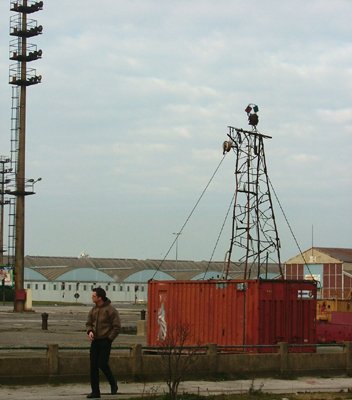
contact Tillie for question
msn+mail: tiloch@hotmail.com
Tillie is still alive and impatient to come in the Alps
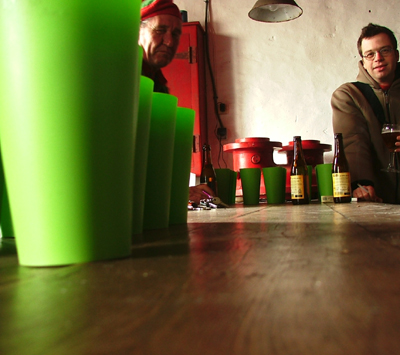
cheers
jerome
posted by jerome
Wed, 16 Feb 2005 21:42:17 GMT
Hi I am TINA I am new to EASA.I am not able to contact our NC and I wanted to ask you can I become 2nd NC ?
posted by tikog
Wed, 16 Feb 2005 13:06:12 GMT
hello easapeople
Im doing a survey on libraries. Do you know any good links to articles about libraries. Especially omas in Seattle and Oslo. Also other new librarybuildings that would be nice to know about.
woohoo
Sigurd
posted by sigurd-dk
Wed, 16 Feb 2005 10:51:08 GMT
Waste … Whose Problem Is it ?
By Jim Travers
jimtravers@eircom.net
Waste be it concrete, metal, plastics or even our everyday household rubbish, has become a hot potato for our overworked government ministers. The main reason for this is because, any minister who is directly or indirectly involved in a business or has business associates in any form will be directly involved in their obligations to environmentally disposal or recycles the products they produce. In the past, we were all prepared to place our commercial or household waste outside our businesses or homes in the hope that if the bag raiders did not get your throw outs then the local authorities will to do the mopping up. The very thought of having to go to a waste disposal facility and deposit something that you have no further use for was viewed as just a complete waste of time and effort. Sure, why not leave it for the itinerants to take it from your door or just wait until its dark when you think Joe and Mary next door has long gone to bed before you can haul the old rubbish out the door and dump it on some unfortunates doorstep or back lane. This sort of mental thinking went on for years with the full support and backing of government ministers who believed that by placing glossy television advertisements encouraging us to deposit our rubbish in litter bins scattered throughout the city and suburbs than we would suddenly become litter conscious. The use of wheelie bins for the storage and disposal of waste was for a long time being used in European countries and America while Ireland’s politicians sat back blindly in hope that nobody would expose the problem. Oh dirty Dublin was really dirty Dublin in them good old days. The days when you could cross the road without having to book an ambulance, just in case you happened to be creamed by a taxi driver who thought reversing up Dame Street was the easiest was of securing a fare. When someone spoke about the environment in those days what they really meant was the countryside. Ah yes the countryside, a place where man is in close harmony with nature and the land. A place where one could step out of the big smoke beyond the Poitin Still and find one’s self up to his knees in the beauty of nature and the environment.
So what has made us more environmentally conscious now, considering that there was times when nobody gave a hoot and you could not walk into the city without being choked by car and chimney fumes or industries that pumped toxic fumes into the atmosphere as if it was an unlimited skybound rubbish tip. As you made your way across that road in the thick of the smog and carefully manoeuvred around heaps of chip bags and ice pop sticks to witness the lads in the corporation discussing on a corner which six would hold the brush and who would push the cart. Mary Harney’s smokeless fuel legislation was an outward and progressive policy even if it meant that the poor so and so’s who could barely afford to keep themselves warm with what they had, were now obliged to purchase a fuel that had to be heaped onto the fire to get any form of heat return and was also more expensive to purchase.
So what obliges us now to be environmentally conscious, apart from the logical understanding in the value of protecting our environment. The answer is money.
You see Mary Harney got it right but failed to say that in order to clean up the mess that successive government ministers had allowed to escalate into disaster, we as consumers had to pay for the privilege. As consumers we are now being asked to become more environmentally conscious because instead of the consumer being told to pay for the mess, the EU in all its splendour introduced Directives on environmental disposal based on the “polluter pays principal” which means the manufacturer and not the consumer is responsible for the waste.
In the Dublin Waste Case the use by the Judge of the “polluter pays principal” to impose personal liability on the directors (where the Act only allows for criminal offences) is a very significant extension of the existing powers to prosecute directors ect personally for criminal offences under various environmental and other statutes.
What is now happening is that the consumer is being asked to pay for the disposal of a range of products that are clearly defined under the Directive’s as being with the “polluter pays principal” and that is the manufacturer. So long as the government drags its heels in enforcing Directives the more likely it will become, that the public will be coerced into paying for the recycling and disposal of manufacturers waste products.
The introduction of the plastic bag tax was not introduced as a method of reducing the problem of plastic bags (although the tax worked) purely because if you were prepared to purchase these bags then you were allowed to damage the environment. Under the EU Directive the manufacturer was responsible for the disposal/ recycling of these bags and therefore the consumer should not have had to pay for this process. The manufacturer could have included a hidden cost to the retailer for the purpose of disposal/recycling but in reality this cost would eventually in time be lost to competition between manufacturers of the product.
This in turn and under the EU Directive would have forced manufacturers to produce biodegradable bags and be competitive in the sale of these bags to the retail sector. They could also have included a return charge, which would have prompted the establishment of small to medium size home based recovery businesses or community funding recovery projects. Instead the government jumped on the bandwagon and introduced a bag tax, which we very well know will not go towards the support of any environmental initiatives other than the granting to established businesses profiteering funds.
What we now see is a whole range of environmental companies with initiatives based on the principal of “if you want to get rid of it they you have to pay for it” which is completely negative to the principals of EU Environmental Directives. This is why both government and a considerable number of companies here in Ireland are stalling with compliance of these Directives in order to create a public climate of “we as individuals have to pay for our waste”. As in the past, Ireland will once again be threatened with the European Court for non compliance of EU Directives, these delays will allow the government time to introduce a range of taxes in the form of environmental initiatives in order to cushion the cost to industry.
If we take for example our general household rubbish bin and analyse the contents for recycling/ disposal we find that the cardboard packaging, bottling and plastic contents, are covered by the EU Directive and the “polluter pays principal”. What are left are organic materials that in reality can be made into compost or will decay safely in landfill.
On behalf of manufacturers, Repak is supposed to look after the end destruction or recycling of these products but based on Irish companies willingness to comply voluntarily with EU Directives, time, will allow government ministers to act while at the same time appear to be complying with the EU Directives. So where does the charge come in for the collection of our waste, especially if the local authorities are telling us that the charge is not for the collection of the waste but for its disposal. If our local authorities are bogged down in fighting a court case on the validity of their charges then why have they not properly explained to both consumers and the anti bin charge movements exactly were this justification is coming from?
In a South Dublin County Councils newsletter with the heading “Household Waste recycling to Increase from 10% to 60%” dated June 2002 the council stated:
”Under the plan all 75,000 households in the South Dublin County Council area are to receive three wheeled bins which will enable users to segregate waste for recycling. To fund this enhanced service, the council has introduced an annual waste charge of Euro190. The County manager Mr Joe Horan said the move is in line with that already taken by other local authorities in Dublin and across the country, to adopt the EU “polluter pays” policy to waste management and increase the level of recycling.”
This in reality is incorrect because both the manager and the whole organisation of alleged county councillors are incorrect with the interpretations of the ” polluter pays principal”. This leads back to my analogy of Dail Eireann members as being a load of “twits”. Now our councillors are in the same boat.
This was also the case when a colleague and I were called to a meeting with the Society for the Irish Motor Industry towards the end of 1999 to explain our research into environmental disposal of motor vehicles. After nearly two hours of explanations and examples of the “polluter pays principal” the penny suddenly dropped and the room went into a state of awe. Now I would have thought that a representative body like the SIMI who got a number of proposals to government wrong on previous occasions, would have learned by their mistakes and fully investigated this proposal for a Directive at that time. Now, in the year 2003 there is no credible move towards proper and acceptable environmental disposal of motor vehicles in accordance with the EU Directive. The laughable part of this continued saga is that the Directive is based on the “polluter pays principal”. This is why Ford, Rover, Nissan and a number of motor manufacturers have got together in order to develop a system that will comply with this Directive because they know that the polluter pays principal means “them”
The Irish motor industry (once again relying on outside to solve their problems) in all its efforts is trying to include a charge when you buy a new vehicle for the environmental disposal of that vehicle. This charge will, in time, be forgotten and lost through price competition at the time of sale. So, in the case of our local authorities, if I put my old Nissan Micra in my wheelie bin (not to difficult) I am then obliged to pay for its disposal………I don’t think so.
Directive 94/62/EC on packaging and packaging waste requires Ireland to achieve a 25% recovery rate by 2001, increasing to 50% by the end of 2005. “Recovery” means energy recovery or recycling. In the absence of energy recovery capacity, Ireland is significantly disadvantaged in terms of meeting the specific recovery targets compared to other EU states and is primarily dependant on recycling to achieve the targets. The Directive is based in the “polluter pays principal”. Producer responsibility is a fundamental element of this principal, whereby producers (manufacturers, importers, distributors, retailers) -as the effective generators of waste -are required to take responsibility and contribute towards the waste management cost at the end of life of products which they have placed on the market.
The Waste Framework Directive lays down basic obligations for member states when it comes to dealing with waste. The government and business is trying to re- interpret these Directives in order to give themselves more time (before judicial compliance) in order to oblige consumers to believe they are responsible for this waste.
In the case of the illegal dumping of clinical waste in a number of unapproved sites around the country, it must be said that the people who approved the dumping of this waste either by sheer unprofessional acts of silence or total negligence, are not the ordinary everyday people who we are told need to be informed and educated on environmental matters. The ordinary citizen who genuinely wants to environmentally dispose of an appliance in the interest of both the environment and his children’s future is forced to continuously consult the yellow pages in an effort to secure someone who will honestly and truthfully environmentally dispose of the appliance at a price that enables him or her to act as a concerned individual. But the price is not the argument; the argument is that the manufacturer and not the consumer are obliged to pay for the disposal. How the manufacturer goes about paying for this disposal is his own business, but one thing is for certain, the consumer should not.
The public’s contribution to environmental disposal should be looked upon as their efforts to assist the manufacturers through the separation of their products and the collect of the waste products by the local authorities. The public are constantly being asked by their local authorities for their assistance in promoting environmental awareness by storing and using waste bins but are then hit with a charge for using this un-asked for service. After all will South Dublin County Council or Dublin City Council allow you to park your car on their property without paying for the pleasure? I think not. But yet they ask you to store unsightly smelly bins that you never requested on your property for nothing. Councils please, business is business. There is a simple way to show your disapproval to a system of penalising the consumer and that is by not paying the refuse collection charges. Those who have already paid should refuse to use any other bin for disposal purposes other than the general refuse bin.
Environmental disposal is big business and it is with this in mind that everything is based around convincing the general public that it is their duty to pay for environmental damages in the protection of business. The uncovering of the illegal disposal of clinical waste is not something that has suddenly come to the attention of the authorities as if there were moments in time when the nation fell asleep and the Garda mistook a lorry full of needles as a tractor pulling a cart full of bulls around for their evening ramble. This my friend’s was big business at a time when you could charge the earth for disposal and blame the travelling community for desecrating our land.
But you see now it’s a time of EU Directives and the withholding of EU grants and subsidies due to non-compliance with EU laws. Government and business cannot sweep everything under the carpet and pretend it does not exist because dirty washing is now required to be cleaned and hung out to dry. Despite our political leaders constantly waffling to us about the importance of Ireland and the skills of its workforce, Ireland is a two-bit country with little or no political clout other than a voting number for the big boys. With regards to the ability of its workforce, oh yes Ireland has a good workforce but so has China, England, Wales, Malta, Korea and need I go on. The reason that Ireland is so attractive to big business is because Ireland pays big business to employ its workforce. If Ireland had nothing to give to big business then Ireland would become a third world country at the flick of a switch. So where do I go from here, well if Ireland does not take the initiative and develop its own environmental recycling and disposal systems then nobody else will help unless we pay them handsomely for our inability’s.
Take another example, the EU Directive on End of Life Vehicles, this Directive makes manufacturers responsible for the environmental disposal of motor vehicles. There has been a proposal for the environmental disposal of motor vehicles submitted to the Department of the Environment and Irish motor importer distributors by an Irish company nearly five years ago. This proposal would enable both government and manufacturers the opportunity to establish approved disposal facilities for the recycling and disposal of motor vehicles in compliance with the Directive. It would remove the constant problem of abandoned cars and company cars, which in turn would save lives and clean up our environment. To date both the Department or the representative body (SIMI) of the Irish motor industry has not as much as sought a meeting in order to further this proposal. Why? Because owners of old vehicles are being asked to pay for the removal and alleged environmental disposal of these vehicles at a cost. Despite years of talking and discussion nobody has come up with a strategy for the disposal/recycling of these vehicles in accordance with the Directive and other associative Directives.
We are being asked to pay for a whole range of products from TVs to washing machines and three-piece suite. The Directive enables us to call the retailer where we purchased the product and request they take it back for recycling or disposal. The cost for this recycling/ disposal facility is paid for by the manufacturer as set out in the Directive. So, in theory if you purchase a pizza you can ask the retailer to collect the packet it came in when you are finished with it. If you bring the packaging back to the retailer you are doing him a favour and helping to protect our environment. This can also be said in the case where a fast food chain was taken to court by a local authority for littering a pavement with a hamburger box. The food chain argued that they had no control over the individual throwing the box on the pavement but lost the case because the court found that the food chain sold the individual the hamburger and provided the box as a means of carrying the burger. The food chain lost its case.
We cannot be completely negative about the successes of the EPA and other interested bodies. Their work and dedicated efforts has most certainly improved our environment but we must question to who did it costs. There are numerous projects that are publicly financed and constructed or operated by the private sector only to find that when the projects do not make money they are then thrown into the public lap until the day comes when it is right for a take-over. The Luas is both a financial and environmental disaster that the Minister Brennan has indirectly agreed with other people’s analysis. On his visit to the Red Cow roundabout Naas Road, he could not believe the traffic congestion that was taking place. No wonder the Irish Medical Organisation is calling for tachometers to be fitted in ministerial cars because if Minister Brennan has never seen this then speed restraint must not be his problem. What started as an Euro288 million project is now set to topple Euro700 million and rising. The damage to the environment around will be with us for years to come, combined with the total inconvenience caused by traffic delays and disruption of communities. Exhaust pollution will increase due to continue and prolonged traffic congestion. Passengers aligning the trams at the end of their journey especially on the Naas Road will be subject to traffic passing either side of the platform.
Elderly people will find it difficult to walk safely from point a to b. There will be an increased tail back of traffic on road that would normally be used to relieve congestion due to the frequency of trams passing given points. The security of track and the safety of children in nearby housing estates will be a major concern. The example of this is the stretch of railway line at the bottom of Ballyfermot when in the past children were injured or killed playing on the tracks. If the motorist are forced to use public transport on mass then the profits from the transport system will go to private interests and not in the public interest. The motor industry will go into decline, jobs will be lost and the state returns on fuel, road and service taxes will decline.
Luas was an ill-conceived badly researched project that was promoted by politicians with not a hint of environmental, social or engineering skills. Its success will be dearly paid for and subsidised, in order to prove a point and save blushes. We have built a fortified fence around the city that will strangle the life out of the city and condemn it to those who can afford to live within its expensive walls. God forgive me for saying, ” Hitler did not do us any favours when he bombed Dublin in the Second World War.” For if he had done this (and I mean no disrespect to anybody that was killed or injured) we might now have a city with a road infrastructure that was made for improved development and not rejuggling. The original construction proposals for the Red Cow roundabout was for a three lane roundabout but was scuttled again by interference for a two lane roundabout. Because motorist thought they were on the track in Mondello the big boys decided to make the Newlands Cross stretch from a three lane to a two lane to a bottle neck one lane. This in turn caused tailbacks as far as Rathcoole. When they got over this problem by widening the roundabout (now don’t forget the original proposal) and creating side slip roads the roundabout was just about coming right when O’Rourkey baby came up with another idea. Lets come up with a project that would cost millions and once started would be impossible to stop. And let us appoint a rail server whose track record is as shaky as the track it once operated. And let us give it to CONNEX and sure if they fail then we can take it back into public ownership, after 10 years blame those who have died, set up a tribunal and waste more millions and then tell the public not to be supporting hair brained ideas in the future.
Now enter Luas …………ah let’s forget about the rest.
What has all this to do with our environment? Well quite a lot. You see ill thought out concepts and projects cause environmental damage that the public has to pick up in environmental financial costs. This in turn deprives other service like hospital admissions and operations to be delayed or cancelled. It causes under funding for our education system and stifles the progress of other public transport projects. It causes governments to raise taxes to fund services or at worse borrow to meet our everyday needs. It basically put our economy into a state of decline that in turn causes unemployment. With a total population of just over 4,000,000 people, this can be broken down into six categories
The young (school going ect)
Second and Third level students
Employers
Workers
Social welfare recipients
The Elderly
There is a huge responsibility being placed on the third and fourth categories who are being asked through all forms of taxes to support the system. Employers never seem to grasp exactly what in time this means to their businesses through wage increases and other operating costs. Their belief that the cost of a project like Luas will eventually enhance their business through the movement of people from one place to another rapidly, is ill founded. In all its efforts government will try and justify the need to borrow in order to portray a sense of continued economic health leading up to another election. The opposition in all its splendour will silently go along with this plan for after all who wants to take over a declining and troubled economy with the future problems of taking the wrath of disapproval from the electorate at its decline, while the opposition sits back and reminisces on the good old days when they helped with the birth of the tiger. We seem to always try and compare Dublin to London, Milan, New York or any other country that has for decades been on the map of places to be. But let us not forget the people of Cork, Limerick,Galway, Clare or anywhere else outside of the country called Dubin with its satellite countries around it. It is the people outside Dublin who are being forced through their taxes to pay for a system that is reckoned to accommodate 20,000,000 passenger fares and not 20,000,000 different people in a year.
Politicians of all political parties are responsible for the true state of our country and should be held accountable for this. For so long as Dail Eireann operates with a membership akin to a superpower and a belief that their sole role is to manage the country like an amusement park while at the same time bleed it dry, then nothing in the future will change.
see also homepage.eircom.net
checkout next posting
EU Commission rejects my appeal against the irish Government
——————————————————————————–
posted by jimtravers
Sun, 13 Feb 2005 20:54:55 GMT
07.02.2005 _on the “competition > information & downloads” site, you find a link to faq. there we answer all the asked questions. nobody gets a personal answer to a question only!
13.02.2005 _everybody who had difficulties with dwg and dxf: i changed the download location, and there is a new zip file too for downloading the whole package including EVERYTHING :-D
flo_ch
posted by easa005.ch
Wed, 09 Feb 2005 12:57:14 GMT
dear all
it’s quite some time ago that you got some general information from us by mail, so it’s gonna be very long. i usually put all the stuff on the website announcing it on the weblog. but today, it’s really necessary for everybody to get informed:
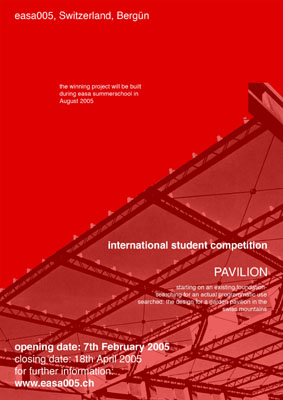
the competition is starting today! from now on, you can download the necessary material that enables you to design a new garden pavilion on top of the old foundation walls in front of the kurhaus bergün. besides the stuff you need to participate in the competition, there is also a poster. we would like you to print it out and spread it around at your school and if possible at other schools of your country too.
other facts are rather pleasing as well. on the list of lecturers, we could add another nice swiss architectural office, the former president of the city of zurich and – thanks to rune (dk) and johannes (de) – even winy maas (mvrdv) said he would be interested to have a talk-like appearance at easa005.ch. as we had in mind to organise discussion rounds with all the lecturers anyway, we might meet each other somewhere in the middle.
our team has right now 16 actively working members in different departments. you have for example already heard/read on the blog from simon and bettine taking care of the competition. saskia and marcella are busy with the location, steffi (our good old nc) is taking care of the kitchen. we still hope to get tillie again – cook of easa 2004 in lille, and there is a swiss guy (another tobi) who confirmed to get done the logistic stuff for the kitchen. eliza is going to take care of the visa (wadda rhyme!), sylvie and niklaus will organise the exhibiton business. silvia will organise the excursion as soon as she’s well again (…), johann the events, ben and cordula have already provided the tutorpack, and tobi and me wanna try our luck in getting sponsors and doing all the small shitty jobs :-). we still need a lot of money as you can imagine. but we’re even supported by some hardworking international conspirators, so it’s gonna work out anyway.
for after the event, we have in mind the following scenario: the results of the workshops will be exhibited from the end of easa on the 21st of august until the end of september. during that time, we will work out the material we got from the tutors to end up with a good exhibition that is going to travel through the arch-faculties of switzerland to the final station in zurich at the beginning of december. in december, the release of the new issue of the semiannual architectural magazine “trans” is going to happen during the opening of the exhibition. trans offered us around 50 pages under the topic “transit” (traffic in europe…) in their magazine. it will be our main publication for the results of the event, and you can order it during easa if you want to keep a souvenir. for the same day in december (or for a later period), we plan to provide a light-version of the exhibition (prints only) to send to you as pdf-format. in the best case we will be able to cover your printing costs, so we could have a general euopean opening of the easa-exhibition at the beginning of december!
next steps in the organisation will be to settle down guidelines for the workshops. probably until the end of this week, I can upload the “technical requirements”, and the tutorpack is being put through the hoops once more. we are aware that we also awe you a quota list. you will get it as soon as we have discussed the last fire issues and know how many people we can invite exactly. for the next few months, I’d like to inform you monthly with a bulletin that can be looked at as an umbrella-newspaper-daughter. that’s the way to set up a well working umbrella that is going to be the real communication tool during the assembly. if we finally manage to send you the bulletins, we’d like you to spread them out among participants, potential tutors, and possible sponsors for your workshops. I clearly want to state that we count on your and the tutors’ help concerning fundraising for the workshops as it is stated in the easa-guide!
I leave you in peace now, happily and unreasonably hardworking as I am… the last thing I’m going to ask you for is to send me some feedback. what are your thoughts if you read a) these news, b) the tutorpack, c) the competition stuff (I know that you might remember one or another passage of the competition brief from the danish one we had two years ago)??? what do you wish for, recommend, want, hate?
thank you very much anyway
flo
posted by easa005.ch
Mon, 07 Feb 2005 07:37:07 GMT
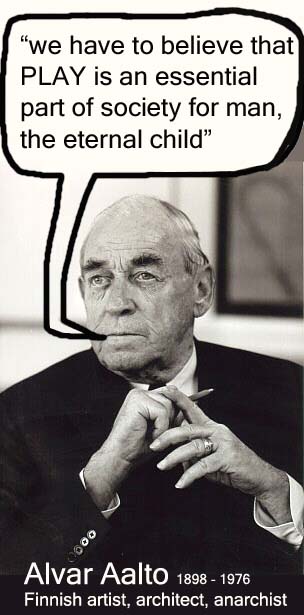
Hugo Alvar Henrik Aalto (1898 – 1976)
an open system of a book entitled “alvar aalto was an anarchist” is being put together. your contributions, questions, views, ideas are all most welcome. especially from our finnish friends and from obelix, i forget his real name; one of the swiss team who was at roubaix
thanks
dunk
for further reading, listening and viewing:
living (written piece)
anarchy and revolution (written piece)
Anarchy and Organisation (written piece)
”
posted by duncan
Sat, 05 Feb 2005 13:49:22 GMT
” 900 days online “
as of today ..
lets open some more champagne bottles :p
posted by sennahoj
Mon, 31 Jan 2005 17:31:38 GMT
snowy bigz
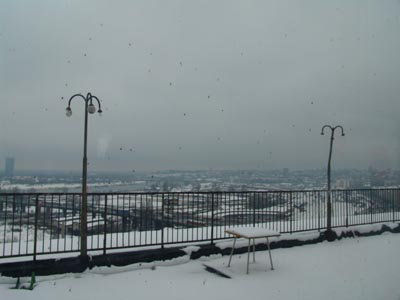
kisses
dubi
posted by dubravka
Thu, 27 Jan 2005 18:18:12 GMT
:)))))))
posted by bilge
Wed, 26 Jan 2005 13:44:36 GMT
First it was private letter, but then I’ve decided to paste it here.
In autumn the SESAM 2005 in belarus was announced by me. But later it was abolished. Why? There were two reasons:
1)I was going to make it in collaboration with the BASA – Belarusian Architectural Students Association, but I’ve found that their current membership is too buerocrathic to do anything real…
2)We where supposing that Sesam will be financed with our university. But we have just standard grant from university to organise student’s activity. But it is fully used with BASA for a smaller summer actions. Hmm… it sounds almost like previous reason…
But! We are inviting EASA people, especially NC’s, to visit our small spring/summer activities. I HOPE, IT WILL GET OUR YOUNGER GENERATION TO MOVE FORWARD!!! The activities are usually 1-2 weeks long, dedicated to reconstruction of historical buildings (most of all – medieval castles). Food, drinks and transport in Belarus are ultra-chip,and ultra-hospitality is the main feature of our people!
Smb. is interested in?
posted by gosha
Tue, 25 Jan 2005 20:44:22 GMT
anybody know where i could get “my architect” the movie on the net?
posted by conor
Mon, 24 Jan 2005 16:23:04 GMT
Hello,
first I want to say I am very happy easa still exists and keeps going strong. It seems a long time ago, being a “professional” for almost ten years now, and having participated in an easa as “cro-magnon” as Marseille – héritage et créativité.
Easa has formed me as a person – through workshops, travels and even co-organizing one. But what formed me most was the people I met and spoke to. About architecture, politics, life, children, anything you can think of. Architecture won’t change the world. People can do so… The mere thought of bringing together all these students and interests is very powerfull already. It is good that a new team, ever evolving, is taking on a new easa every year. There will always be newcomers and veterans, as in the “real” world.
But easa will also always spark new ideas and international contacts and understanding, which might be the most important factor in the easa movement. Getting to know that people from abroad are also just people. That the only place where borders exist is man’s mind. That you are living good memories.
Please keep the spirit and don’t institutionalize. There are already far too much institutions around. Play and enjoy!
Yours,
Iwert.
posted by iwert
Thu, 20 Jan 2005 21:25:58 GMT
some thoughts …
[as a reponse to jerome’s and dunk’s post]
Set into the world in 81, easa is a monster, a body without organs …. Everchanging, rhizomatic, always on the quest for its own identity, always struggling with itself for its sense, living at the edge to a Club-Med-like kindergarden for architecture students and still aiming at raising its awareness and quality level.
It’s often a precarious balance – people complaining about it’s easy going and thinking it to be just a pretext for having fun and internationl flirts (they did so already 20 yrs ago).
Though it is still alive and unique – as far as I know – in its form. Right in the early eighties – far before the internet era, they talked about networking. Far before eMails and chats and blogs they did so by snail-mail and fax.
It is a beast – the head in the clouds but feet on the ground. For being set up every year by a new team, being confronted to the same logistical and organisational probs anew, it is a fact that knowledge transfer from one year to the other might be the major lack. The beast’s memory is short. Three to four years at best – as long as the “dinosaurs” stick to it. There is nearly no “best practice”, no long term experience of more experienced members like in a firm that always grows and builds and expands[*].
Just the “easa-guide”, a document hardly read by even the NCs or organizers, holds grasp of the past practical experiences. The monster’s weakness might be one of its strengths. The same problems are always thought over anew – sometimes with astonishing results. It gives orga-teams the chance to experience an always unique and new experiment.
As such, paces of “evolution” towards a higher professionality are hard to take. Whilst they’ve been claimed for nearly right from the start in the 80s, it would need a more institutionalised EASA to do so. The monster would be compelled getting organs, a skeleton, with professiona archiving, knowledge transfer, it would need to become a kind of firm, an agency or foundation with a registered trademark, a corporate image and design, its lawyer and accountant.
But it would loose its soul of experimental “from students for students” alter-academical character, and maybe even it’s spirit?
cheers
aLx_Be
ps: this is an invitation to all that feel concerned to read the easa guide – as stated at the incm_bgd – and the archive … matter of lenghten easa’s short memory ;-)
[*] which is actually a typical ark’s problem: always starting from zero, a scratch when designing … whereas some migt think “aren’t the housing probs all the same? why always start from zero?” …. others might think that this is what makes designs unique …
posted by rimbaud
Tue, 18 Jan 2005 15:49:20 GMT
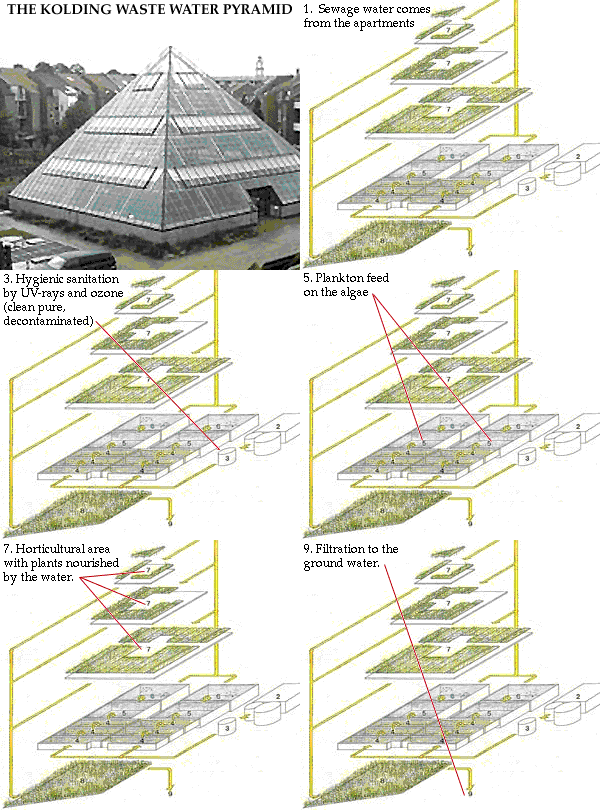
city shit-> bio plant -> food production
“Buildings Like Trees, Cities Like Forests”
is a phrase from William McDonough, who is an internationally renowned designer and one of the primary proponents and shapers of what he and his partners call ‘The Next Industrial Revolution.’
…We hope it is the design strategy of the future.”
www.mcdonough.com
Local Bio-Sewage Treatment:
Community scaled waste and grey water treatment centre, separate from existing civic infrastructure grid.
gif from
www.umanitoba.ca
case study
www.cf.ac.uk

danish PLOT have also a few clever ideas from their updated smart new site
www.plot.dk
see their film here
www.plot.dk
Fritjof Capra, PhD; Founding Director, The Center for Eco-Literacy: can be watched on film here:
”berkley lectures: education for sustainable living- stereo webcasts”
easa.antville.org
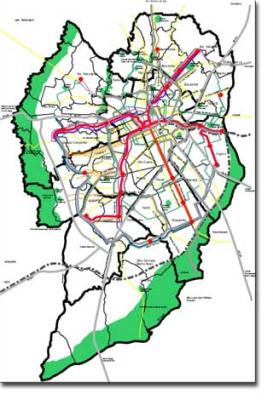
curitiba in brazil is one of the best examples of how to make a city more sustainable
www.sustainable.org
www.solutions-site.org
”The Zero Emissions City of the Future” film can be watched here
www.ictpl.net
has anyone got other good examples done or proposed for urban ecology
posted by duncan
Thu, 13 Jan 2005 15:47:47 GMT
